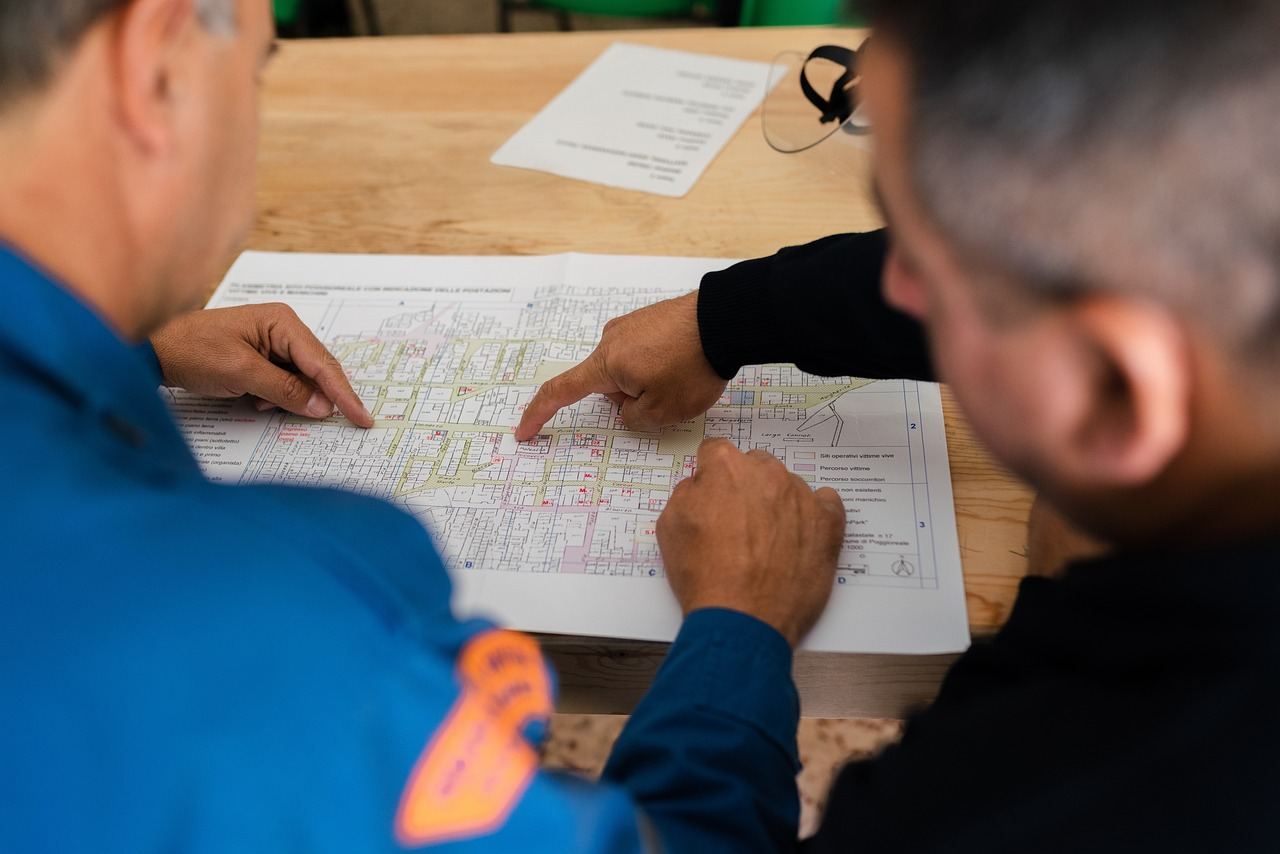
If you have to write or review an emergency operations plan, start with what it is: a written document describing how a community or organisation responds to a hazard. FEMA’s CPG 101 offers guidelines for building one.
An emergency operations plan sits inside the wider field of emergency management, where it turns preparedness work into written, shareable instructions.
| Item | Value |
|---|---|
| Guidance document | Developing and Maintaining Emergency Operations Plans, CPG 101 |
| Publisher | Federal Emergency Management Agency (FEMA) |
| Edition cited by ASPR TRACIE | Version 3.1 (2025) |
| Planning scope | Whole community emergency operations plans (EOPs) |
| Companion guide listed by Oklahoma Emergency Management | THIRA and SPR Guide |
These figures come from ASPR TRACIE and Oklahoma Emergency Management. Editions and listings can change, so check the source before you rely on them.
What is an emergency operations plan?
An EOP is a written plan that sets out how an organisation or community will respond when a hazard strikes. It is not a forecast, a warning or an alert. It is the internal document that people consult before, during and after an event.
FEMA’s guide is described by ASPR TRACIE as providing guidelines on developing whole community EOPs, with best practices and suggestions for plan development. “Whole community” signals that the plan is meant to reflect more than one agency or department.
Typical contents of a plan
The source pack for this page does not reproduce the chapter list of the FEMA guide, so read the guide itself for its exact structure. In general terms, a plan answers a set of practical questions:
- Purpose and scope: which hazards, places and operations the plan covers.
- Roles and responsibilities: who decides, who acts and who supports.
- Coordination: how departments and outside partners work together.
- Communication: how information moves inside the organisation and out to the public.
- Resources: what people, equipment and facilities the response relies on.
- Maintenance: how the plan is reviewed, tested and revised.
Two topics usually need their own documents. Command structure is covered by the incident command system, and messaging detail belongs in a crisis communication plan that the EOP can refer to.
How the plan is used in practice
A plan has value only if people can find and follow it. Planners use it to align roles before an event, as a reference during one, and as a baseline when they review what happened afterwards.
It is not limited to government. ASPR TRACIE says healthcare emergency planners can leverage the guide as they create, update or revise planning documents.
Planners also tend to pair an EOP with hazard analysis. Oklahoma’s planning page lists the THIRA and SPR guide, the FEMA National Planning Frameworks and other FEMA planning guides next to the EOP guide, which shows how these documents are meant to be read together.

Keeping a plan current
The wording used by ASPR TRACIE covers creating, updating and revising, and the guide’s own title includes the word “maintaining”. A plan is therefore a living document, not a one-off deliverable.
A sensible routine looks like this:
- Confirm which edition of the guide you are working from.
- Review the plan against the hazards your area or organisation faces.
- Test it with partners and record what did not work.
- Revise the text and tell everyone who holds a copy.
Treat the order as a suggestion rather than a rule from the source. Your own jurisdiction or sector regulator may set requirements that apply to you.
Where can you find the official guidance?
The guide is published by FEMA, and the Oklahoma Department of Emergency Management lists it as a PDF on its plans and guidance page. That page sits beside the THIRA and SPR guide, the National Planning Frameworks and FEMA’s planning guides.
As of the ASPR TRACIE page’s 2025 citation, Version 3.1 is the edition named there. The page’s address and title may point to an earlier edition, so confirm the edition on FEMA’s own site.
This site is independent and does not issue alerts or warnings. For what to do in a real emergency, follow your local emergency authorities.
Frequently asked questions
Is an emergency operations plan the same as a public alert?
Show answer
No. The plan is a working document for responders and decision-makers, while a public alert is a message sent to people at risk. Alerts are usually one task the plan describes.
Who can use FEMA’s planning guide?
Show answer
The guide is framed around whole community plans, and ASPR TRACIE points healthcare planners to it as well. Other organisations can read it as a reference for their own drafting.
Does the guide tell you what to put in each section?
Show answer
It offers guidelines, best practices and suggestions, according to the ASPR TRACIE summary. Read the full FEMA document for the detail, because the summary does not list its contents.
What should you read alongside a plan?
Show answer
Oklahoma’s planning page groups the THIRA and SPR guide, the National Planning Frameworks and FEMA planning guides together with the EOP guide. They are a sensible next stop.