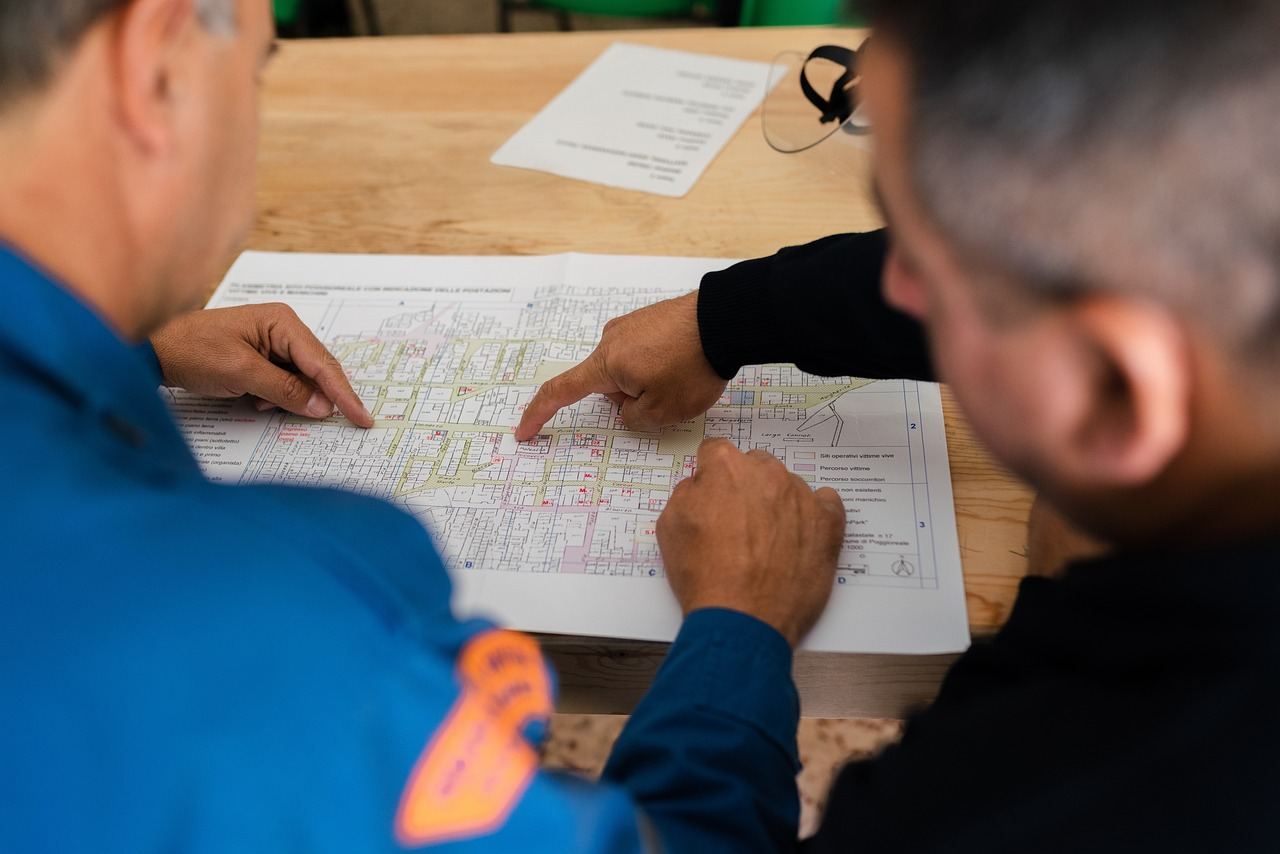
Wondering how a tabletop exercise emergency management teams run actually works? You talk through a hypothetical emergency, test your plans against it, and record what needs fixing. FEMA classes it as a discussion-based exercise.
A tabletop is a part of wider emergency management planning, and this guide covers how to design one and how to judge the results.
| Item | Value |
|---|---|
| Exercise category | Discussion-based, alongside seminars, workshops and games |
| Purpose of a tabletop | Generate discussion of a hypothetical, simulated emergency |
| Basic format | Scenario is presented and remains constant |
| Advanced format | Pre-scripted messages alter the original scenario |
| Operations-based counterparts | Drills, functional exercises and full-scale exercises |
| Program guidance | Homeland Security Exercise and Evaluation Program (HSEEP) |
The descriptions come from FEMA’s Exercise Descriptions page. Wording and guidance can change, so check the source before you rely on them.
What a tabletop exercise is
A tabletop exercise is a facilitated conversation about a made-up emergency, not a field activity. FEMA’s description says it is intended to generate discussion of a hypothetical, simulated emergency, and that players are encouraged to examine areas of concern together and solve problems (FEMA).
The same source lists several uses. A tabletop can be used to:
- enhance general awareness;
- validate plans and procedures;
- rehearse concepts;
- assess the types of systems needed for prevention, protection, mitigation, response and recovery.
Generally, tabletops aim at conceptual understanding, at identifying strengths and areas for improvement, and at changing perceptions. They suit questions of policy and coordination better than questions of physical skill.
Where tabletops fit among exercise types
FEMA groups exercises into discussion-based and operations-based families. Discussion-based exercises focus on strategic, policy-oriented issues, and facilitators or presenters usually lead the conversation toward the exercise objectives (FEMA).

The discussion-based family includes these formats:
- Seminars orient participants to authorities, strategies, plans, policies and procedures.
- Workshops add more participant interaction and aim at building a product.
- Tabletop exercises test a hypothetical emergency through discussion.
- Games explore the consequences of player decisions and actions.
Operations-based exercises include drills, functional exercises and full-scale exercises. They involve actual reaction to a scenario, such as initiating communications or mobilizing personnel and resources, and full-scale exercises are typically the most complex and resource-intensive type.
How do you design a tabletop exercise?
FEMA points to HSEEP as the set of guiding principles for exercise programs, with a common approach to management, design and development, conduct, evaluation and improvement planning (FEMA). The steps below are an editorial outline that follows that logic.
- Set clear exercise objectives tied to the plan or procedure you want to test.
- Write a hypothetical scenario that brings participants up to a simulated present time.
- Appoint a facilitator to keep the group on track toward the objectives.
- Prepare the problems or messages the facilitator will present, in the order they will appear.
- Decide in advance how resolutions and decisions will be documented for later analysis.
If your plan covers public warnings, build the scenario so participants must decide how messages reach everyone. The guide to accessible emergency alerts is a useful companion for that discussion.
Shared vocabulary also matters when a scenario touches on movement of residents. A short read on evacuation warning vs evacuation order can help players agree on terms before they begin.
Basic and advanced tabletop formats
FEMA notes that tabletops can range from basic to complex. In a basic tabletop, such as a Facilitated Discussion, the scenario is presented and remains constant while players work through a list of problems from the facilitator (FEMA).
In a more advanced tabletop, play advances as players receive pre-scripted messages that alter the original scenario. The facilitator usually introduces problems singly, as a written message, simulated telephone call, videotape or other means, and player decisions are carried into the unfolding scenario.
Choose the basic form when plans are new and you mainly need shared understanding. Choose the advanced form when you want to see how decisions change later conditions.
How to evaluate a tabletop exercise
FEMA says a tabletop’s effectiveness comes from the energetic involvement of participants and their assessment of recommended revisions to current policies, procedures and plans (FEMA). Evaluation therefore starts with what players decided, not with how smoothly the session ran.
Useful records from a session include:
- each problem presented and the resolution the group reached;
- the plans, authorities and procedures players referred to for guidance;
- strengths the group identified;
- areas for improvement and recommended revisions to documents.
Because resolutions are documented for later analysis, the notes become the input for improvement planning. HSEEP lists evaluation and improvement planning as parts of the same cycle as design and conduct.
Frequently asked questions
How is a tabletop different from a drill?
Show answer
A tabletop is talk-based, while a drill is an operations-based activity that validates a specific function in a single agency or organization. In a drill, people actually carry out the task rather than describe it.
Does a tabletop have to be complicated?
Show answer
No. A simple facilitated discussion with a fixed scenario counts as a tabletop. Complexity can be added later through scripted messages.
Who runs the session?
Show answer
Facilitators or presenters usually guide the discussion and keep participants moving toward the objectives. They present the problems and let the group debate them.
What is HSEEP?
Show answer
HSEEP is the Homeland Security Exercise and Evaluation Program. FEMA describes it as supplying guiding principles and a common approach to running exercise programs from planning through improvement.