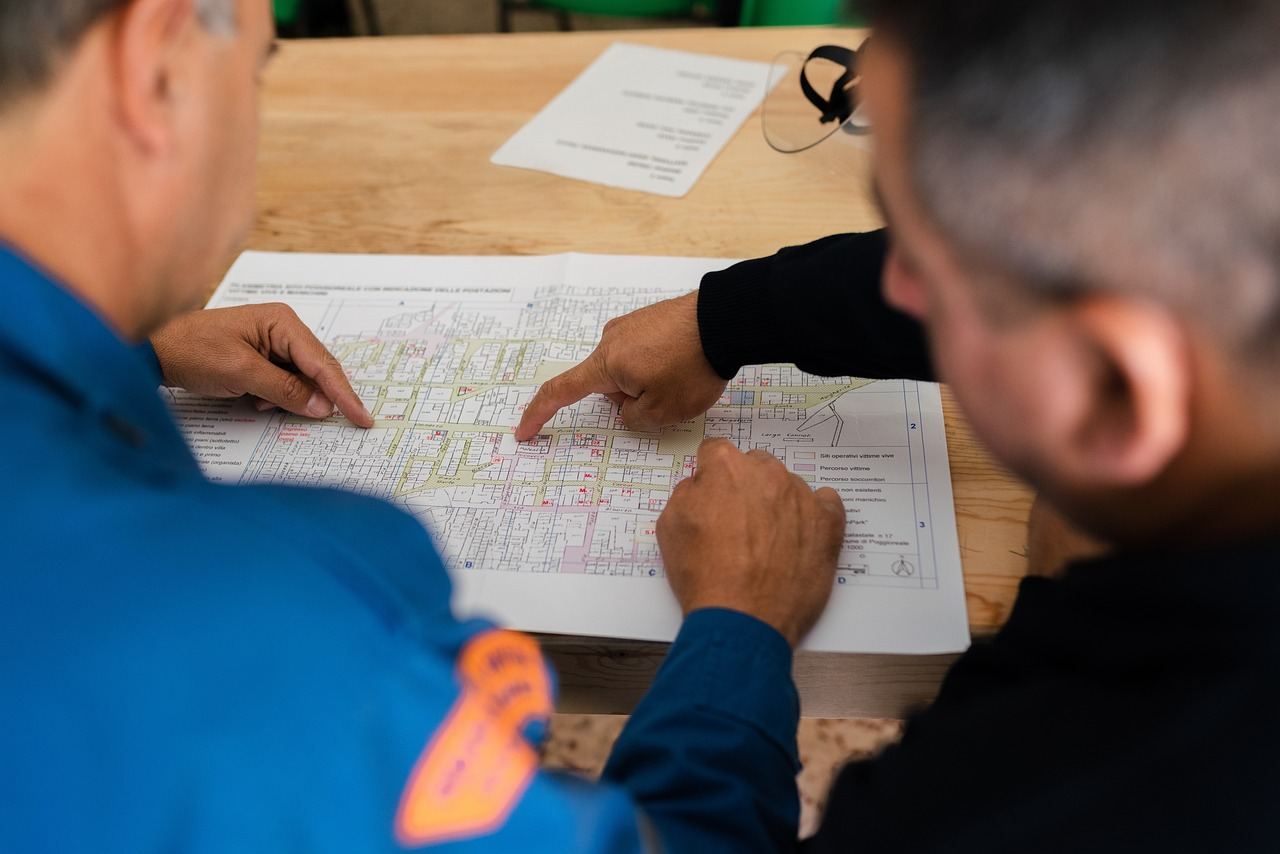
You may not be together when disaster strikes. A good emergency communication plan records who to contact, where to meet and what each person needs, so you can reconnect quickly. Start with one shared form.
This guide is part of the site’s wider coverage of emergency management, and it focuses on the planning that happens before any incident.
| Item | Value |
|---|---|
| Purpose of a family plan | Reconnect if separated during a disaster |
| Ready.gov form output | Emailable PDF file |
| Form sections | Household, family members, emergency plans, contacts, meeting places, medical information |
| National Emergency Communications Plan (NECP) | The nation’s strategic roadmap for emergency communications |
| Emergency Communications Preparedness Center (ECPC) | 14 federal departments and agencies |
The figures above come from the Ready.gov Make a Plan form and CISA’s emergency communications planning page. Details can change, so check those sources before you rely on them.
What an emergency communication plan includes
An emergency communication plan is a written record of who needs to reach whom, by what route, and where to go if normal routes fail. Ready.gov’s form states the problem plainly: household members may be apart when a disaster strikes, so each person needs to know how to reconnect. You can read the full form on the Ready.gov page.
The form is organised into sections, which makes a handy checklist:
- Household information, such as a home number and address
- Family members and their contact details
- Emergency plans for schools, childcare, caregivers and workplaces
- Emergency contacts outside the household
- Emergency meeting places with instructions
- Medical information for people and pets
Once complete, the form can be sent to an email address as a PDF file. Ready.gov also says agencies do not keep what you type into it, so the copy you create is yours to share with the people it names.
Step by step: building the household plan
Work through the form in order and fill in what you know first. A partly finished plan that everyone has is more useful than a perfect one that nobody can find.
- Household details. Add the home number and address.
- Family members. For each person, record a name, mobile number, any other number or social media account, an email address and important medical or other information.
- Schools, childcare, caregivers and workplaces. Note the address, the emergency or hotline number, the website and the emergency plan or pick-up arrangement for each.
- Emergency contacts. List names with mobile, home and email details, plus an address.
- Meeting places. Name each location and write short instructions for getting there.
- Medical information. Record poison control, doctor, pediatrician, allergy and prescription details, insurance, assistive devices and the veterinarian.
The assistive device field asks for the make, model, supplier and serial number, which is the sort of detail that is hard to recall under stress. Fill it in while you are calm.
For personal safety steps such as evacuation or shelter, follow your official local emergency authorities. A written plan supports their instructions and never replaces them.

How public agencies plan emergency communications
Organisations face the same question at a larger scale. CISA’s planning page explains that its Emergency Communications Division is congressionally mandated to develop and update the National Emergency Communications Plan, the nation’s strategic roadmap for emergency communications, in collaboration with the whole community. The details are on CISA’s planning page.
Coordination is also built into the system. The same page describes the ECPC as the federal interagency focal point for interoperable and operable communications coordination, made up of 14 federal departments and agencies.
CISA’s guidance documents page describes an Interoperability Continuum that breaks interoperable communications into five key components:
- Governance
- Standard operating procedures (SOPs)
- Technology, covering data and voice
- Training and exercises
- Usage
Those five components translate well to any group plan, from a small business to a school. Someone owns decisions, procedures are written down, tools are chosen, people practise, and the plan gets used.
Applying the same ideas to a household or workplace
CISA’s coordination page notes that interoperable emergency communications requires coordination between stakeholders working across disciplines and jurisdictions. For a household, that means everyone knows their role. For a workplace, it means each team knows who decides, who informs and who is informed. See CISA’s coordination page for the agency’s description.
CISA also publishes guidance on creating standard operating procedures that can assist in coordinating incident response, on the same guidance page. The page describes EDXL messaging standards as a way to share data such as maps, situational reports or alerts across different software applications and devices, which is a point to raise when you compare tools.
Planning for how authorities reach the public is covered in the guide to public warning systems. Organisations that need a broader, audience-facing document can read about a crisis communication plan.
State-level plans follow a similar logic. CISA describes Statewide Communication Interoperability Plans as locally driven, multi-jurisdictional and multi-disciplinary plans to enhance emergency communications, so a local plan should be written with neighbouring groups in mind.
Frequently asked questions
What is the minimum a plan should hold?
Show answer
Names and numbers for everyone involved, at least one place to meet, and the health details a caregiver or responder would need. Everything else on the Ready.gov form can be added later.
Is the Ready.gov form private?
Show answer
The form page states that government agencies do not store or share the entries. After you email the PDF, it sits in your own inbox, so decide who should hold a copy.
Does a written plan override official instructions?
Show answer
No. Instructions from your local emergency authorities take priority, and the plan simply helps you act on them with less confusion.
Who writes the national plan for emergency communications?
Show answer
Within CISA, the Emergency Communications Division carries that responsibility, according to the agency’s planning page.